Introduction
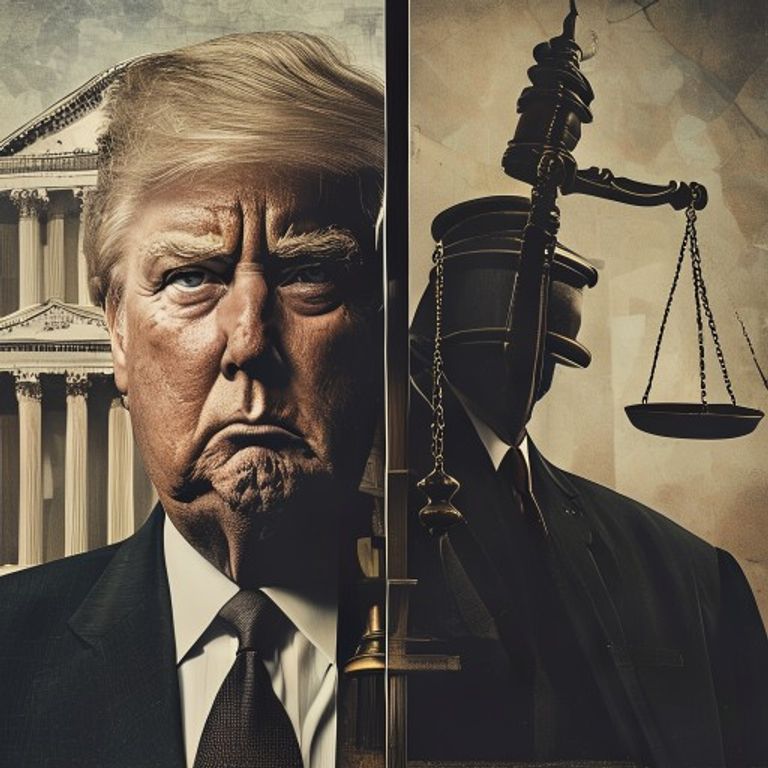
The US Supreme Court, often perceived as the ultimate arbiter of American law, has navigated a complex and often contradictory path when it comes to cases involving former President Donald Trump. His presidency was marked by frequent legal battles, many of which eventually reached the highest court in the land. Examining these decisions reveals a fascinating paradox: while the Supreme Court delivered significant defeats to Trump in specific, high-profile cases, it simultaneously solidified and expanded his long-term influence, particularly through its ideological shift.
This article delves into how the nine justices, including three appointed by Trump himself, have both reined in the former president’s immediate legal ambitions and, perhaps inadvertently, broadened the scope of executive power or, more directly, ensured a lasting conservative impact on American jurisprudence.
The High Court’s Rejections: Trump’s Legal Setbacks
Donald Trump faced several direct legal challenges that saw the Supreme Court rule against his immediate interests, often frustrating his efforts to maintain privacy or obstruct investigations.
Executive Privilege and Jan 6 Documents
One of the most notable defeats for Trump came in early 2022 when the Supreme Court refused to block the release of documents from his White House to the House Select Committee investigating the January 6th Capitol attack. Trump had asserted executive privilege over these records, but lower courts had sided with the committee. The Supreme Court’s decision, without dissent, effectively rejected Trump’s broad claims of executive privilege, signaling a limit to a former president’s ability to shield presidential communications from congressional scrutiny, especially when a sitting president (Biden) waives that privilege.
The Battle Over Financial Records
Trump also suffered setbacks in his protracted fight to prevent the release of his financial records. In a pair of cases in 2020 (Trump v. Mazars USA, LLP and Trump v. Vance), the Supreme Court ruled that a sitting president is not absolutely immune from congressional subpoenas for his financial records or from state criminal investigations. While the Court did send these cases back to lower courts for further review, establishing a demanding standard for such subpoenas, the fundamental ruling that a president is not above the law in these contexts was a clear defeat for Trump’s argument of absolute immunity. His financial records eventually became accessible to prosecutors.
Post-Election Challenges
Following the 2020 presidential election, Trump and his allies initiated numerous lawsuits challenging the results, alleging widespread fraud. Many of these cases reached the Supreme Court. However, the Court consistently refused to hear these challenges or quickly dismissed them, often without comment. This collective inaction by the Supreme Court effectively shut down Trump’s legal pathway to overturn the election results, serving as a decisive blow to his efforts to remain in power.
A Reshaped Judiciary: Trump’s Enduring Influence and Expanded Power
While Trump faced specific legal defeats, his most profound and lasting impact on the American legal landscape, and arguably a significant expansion of his power, stems from his judicial appointments and the subsequent rulings by the conservative supermajority he helped create.
The Legacy of Judicial Appointments
During his single term, Donald Trump appointed three conservative justices to the Supreme Court: Neil Gorsuch, Brett Kavanaugh, and Amy Coney Barrett. These appointments cemented a 6-3 conservative majority, fundamentally altering the Court’s ideological balance for decades. This shift represents a monumental expansion of Trump’s long-term power and influence, as these justices have consistently delivered rulings aligned with conservative legal principles and the policy goals often championed by Trump.
Deregulatory Wins and Administrative State Limits
The new conservative majority has shown a clear inclination to curb the power of federal administrative agencies, a goal frequently espoused by Trump’s deregulatory agenda. A prime example is the 2022 decision in West Virginia v. EPA, where the Court significantly limited the Environmental Protection Agency’s authority to regulate greenhouse gas emissions from power plants. This ruling, premised on the “major questions doctrine,” signaled a judicial preference for Congress, not agencies, to make significant policy decisions, effectively weakening the administrative state—a long-standing conservative objective that aligns perfectly with Trump’s own policy preferences and those of his appointees.
Upholding Conservative Social Agenda
Perhaps the most significant and far-reaching “expansion of power” through his appointments came with the overturning of Roe v. Wade in Dobbs v. Jackson Women’s Health Organization (2022). This landmark decision eliminated the constitutional right to abortion, returning the authority to regulate or ban abortion to individual states. This outcome was a direct result of the conservative supermajority Trump engineered, fulfilling a key promise to his base and achieving a generational goal for the conservative legal movement. It represents a lasting impact on American society, directly attributable to Trump’s presidential power of judicial nomination.
The Paradox of Power and Defeat
The Supreme Court’s interactions with Donald Trump present a compelling paradox. On one hand, the Court acted as a check on his immediate power, rebuffing his attempts to shield personal financial data, prevent the release of sensitive White House documents, and overturn election results. These rulings underscored the principle that even a president is subject to legal scrutiny and established limits to executive privilege.
On the other hand, Trump’s most enduring legacy, and arguably his greatest expansion of power, resides in the judiciary he fundamentally reshaped. By appointing a conservative supermajority to the Supreme Court, he ensured that his political and ideological vision would continue to influence American law and society long after his presidency concluded. This power is not in direct control over specific executive actions, but in the long-term ideological direction of the country as dictated by judicial interpretation.
Conclusion
The US Supreme Court’s relationship with Donald Trump has been a dynamic interplay of immediate challenges and long-term influence. While specific rulings handed him defeats, reaffirming the rule of law and limiting certain presidential immunities, his strategic reshaping of the federal judiciary, particularly the Supreme Court, stands as a testament to his lasting impact. The conservative supermajority he created continues to issue decisions that align with his broader political and ideological objectives, from curbing federal regulatory power to overturning long-standing precedents. This dual narrative of thwarting and empowering illustrates the multifaceted nature of presidential power and the enduring legacy of judicial appointments in American governance.
TAGS: US Supreme Court, Donald Trump, Judicial Appointments, Executive Power, Legal Rulings, American Politics, Constitutional Law, Presidency