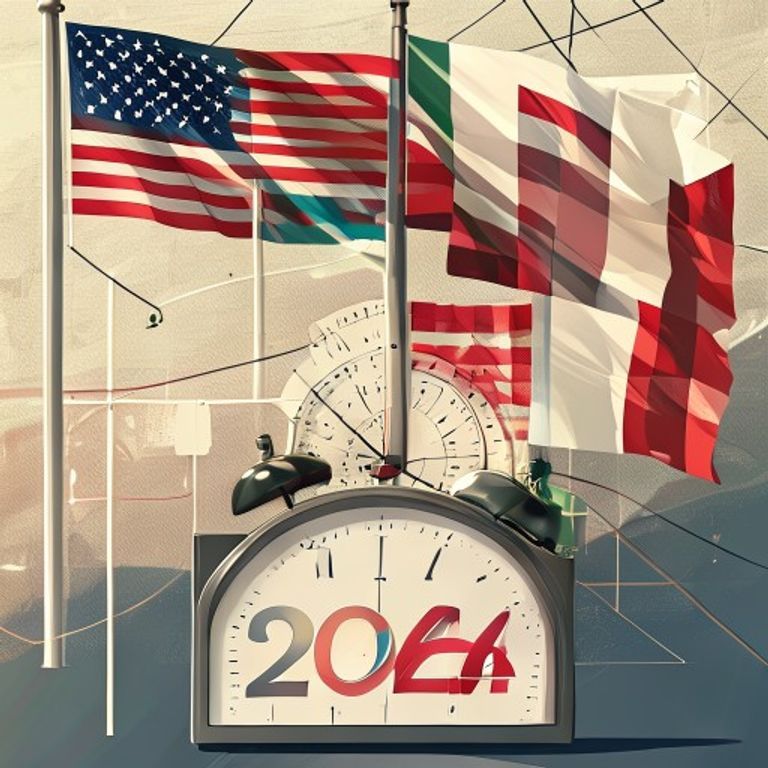
The United States-Mexico-Canada Agreement (USMCA), a cornerstone of North American economic integration, came into force on July 1, 2020. Replacing the nearly three-decade-old NAFTA, the USMCA was hailed as a modernized trade pact designed to address new economic realities. However, embedded within this agreement is a critical provision known as the “sunset clause” – a review mechanism set to commence in 2026. This looming deadline holds significant implications for businesses, policymakers, and the economies of all three nations. Understanding its potential impact and preparing for the future is paramount.
What is the USMCA and Why Does it Matter?
The USMCA is a free trade agreement between Canada, Mexico, and the United States. It built upon many of the principles of its predecessor, the North American Free Trade Agreement (NAFTA), but introduced significant updates and changes. Key modifications included:
- Automotive Rules of Origin: Increased requirements for North American content in vehicles to qualify for duty-free treatment, along with new labor value content provisions.
- Labor Provisions: Stronger commitments to workers’ rights and enforcement mechanisms, particularly in Mexico.
- Digital Trade: Comprehensive chapters addressing cross-border data flows, e-commerce, and cybersecurity.
- Intellectual Property: Extended copyright terms and stronger protections for patents and trademarks.
- Dispute Settlement: Retained a modified investor-state dispute settlement mechanism for some sectors, while also including state-to-state dispute resolution.
For decades, North American trade agreements have fostered integrated supply chains, boosted regional competitiveness, and provided stable market access for businesses. The USMCA continues this legacy, supporting millions of jobs and billions in trade across the continent. Its stability is vital for industries ranging from manufacturing and agriculture to technology and services.
The “Sunset Clause”: The Heart of the Matter
Unlike NAFTA, which had no expiration date, the USMCA includes a “sunset clause.” This provision dictates that the agreement has a 16-year term and is subject to a joint review by all three countries every six years. The first of these reviews is scheduled for 2026.
During this review, the parties will assess the agreement’s operation and determine whether to extend it for another 16-year term. If they agree to extend, the agreement continues. If, however, any party indicates an intention not to extend, the countries have up to 10 years to resolve their differences and reach a new consensus. Should no resolution be found, the agreement would automatically terminate after the 16-year term ends (i.e., in 2036, if the 2026 review is not successful). This mechanism was designed to ensure the agreement remains relevant and effective, while also giving each country leverage to push for reforms or address concerns.
Potential Scenarios and Their Implications
As the 2026 review approaches, several scenarios could unfold, each with distinct implications for the North American economy:
-
Scenario 1: Smooth Extension
The most desirable outcome for businesses is a straightforward agreement by all three parties to extend the USMCA for another 16 years. This would signal continued stability, encourage long-term investment, and allow supply chains to operate without significant disruption. While likely, it’s not guaranteed, as political priorities can shift.
-
Scenario 2: Renegotiation or Amendments
If one or more parties identify significant concerns or areas for improvement, the 2026 review could trigger a period of renegotiation. This might involve updating specific chapters, addressing new trade challenges (like climate change or artificial intelligence), or resolving ongoing disputes (e.g., dairy access for Canada, energy policies in Mexico, or specific automotive rules). While potentially leading to a stronger, more modern agreement, renegotiation inherently introduces uncertainty and could lead to temporary disruptions in trade flows or investment decisions.
-
Scenario 3: Non-Renewal or Termination (Least Likely but Possible)
The least favorable scenario would be an inability of the parties to agree on an extension, ultimately leading to the USMCA’s termination. This would be highly disruptive, potentially reverting trade relations to World Trade Organization (WTO) rules. Tariffs would reappear, supply chains would be fractured, and businesses would face immense challenges in adapting to a fragmented North American market. The economic fallout for all three countries would be severe, making this scenario politically undesirable for any government.
The uncertainty surrounding these scenarios can impact foreign direct investment, long-term business planning, and the stability of cross-border operations.
Preparing for the Uncertainty: What Businesses Should Do
Given the potential for change, businesses operating within or reliant on North American supply chains should begin preparing:
- Stay Informed: Closely monitor political developments and public statements from government officials in all three countries regarding the USMCA review.
- Assess Vulnerabilities: Conduct a thorough review of your supply chain to identify dependencies on specific USMCA rules (e.g., rules of origin, customs procedures) and assess potential risks if those rules change.
- Diversify (Where Possible): Explore options for diversifying sourcing, manufacturing locations, or market access to mitigate risks associated with potential trade disruptions.
- Engage with Policy Makers: Join industry associations and make your voice heard regarding the importance of the USMCA’s stability and the specific concerns of your sector.
- Develop Contingency Plans: Prepare for various outcomes, from a smooth extension to potential renegotiation, and have strategies in place to adapt to new trade environments.
Conclusion
The 2026 USMCA review is more than just a bureaucratic checkpoint; it’s a critical moment for the future of North American free trade. While the USMCA has largely provided stability since its inception, the sunset clause introduces an element of strategic tension and opportunity. For businesses, proactive engagement and diligent preparation will be key to navigating the upcoming review period successfully and ensuring continued prosperity across the integrated economies of Canada, Mexico, and the United States.
TAGS: USMCA, North American Free Trade, Trade Policy, 2026 Review, Sunset Clause, International Trade, Business Impact, Canada Mexico US